
How Much Does a Loft Conversion Cost in Brighton? A Local Builder’s Guide
In Brighton and Hove, where terraced houses regularly sell for half a million and the costs of moving up the ladder — stamp duty, agents, solicitors, and the upheaval — easily exceed £25,000, converting the unused roof space above your ceiling makes substantially more financial sense than buying somewhere bigger. A loft conversion adds a genuine extra floor to your home, delivers the bedroom, bathroom, or office your household needs, and increases property value in a market where additional bedrooms command a significant premium. You keep the location, the schools, and the character of a home you chose for good reasons.
But loft conversion costs vary considerably depending on the type of conversion your roof requires, the size of the finished room, whether you include an ensuite, and the structural work involved. Brighton’s housing stock adds its own considerations — the city’s extensive conservation areas, the density of terraced housing, and the mix of property ages all influence what can be built and how much it costs. This guide sets out realistic figures and helps you budget with confidence.
Velux Conversions
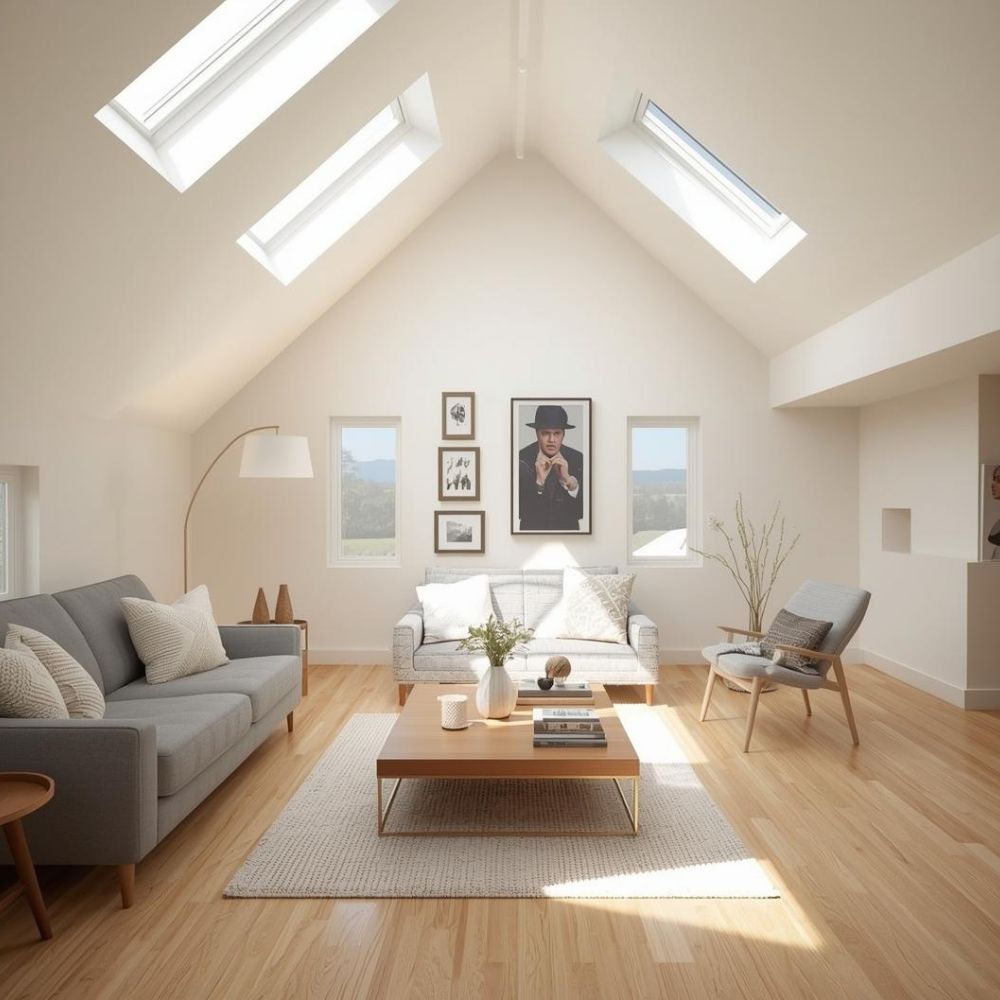
A Velux conversion is the simplest and most affordable option. The existing roof stays completely unchanged — no dormers, no external alterations — with natural light from Velux windows fitted into the existing slope. The interior is fitted out with a strengthened floor, insulation, a new staircase, electrics, plastering, and decoration.
The essential requirement is adequate headroom — roughly 2.2 metres from the ceiling joists to the ridge. Brighton’s housing stock is mixed in this regard. The larger Victorian and Edwardian semis and detached properties across Preston Park, Withdean, and Patcham often have generous roof spaces with plenty of height. The smaller Victorian terraces through Hanover, Elm Grove, and the Lewes Road corridor have tighter roofs where headroom may be marginal.
A Velux conversion in Brighton typically costs between £22,000 and £36,000. A straightforward bedroom without an ensuite sits at the lower end. Adding an ensuite, upgraded flooring, and higher specification finishing pushes toward the upper end. The quickest conversion type, completing in four to six weeks.
The Velux approach is particularly relevant for properties within Brighton’s conservation areas — which cover significant parts of the city including the seafront, Kemp Town, parts of Hanover, and the historic streets around the Lanes. Since a Velux conversion does not alter the roofline, it encounters fewer planning constraints than a dormer, making it the safest option where conservation area restrictions apply.
Rear Dormer Conversions
A rear dormer extends the roof outward at the back of the property, creating a flat-roofed structure that dramatically increases both usable floor area and headroom. Where a Velux confines you to the space under the slope with ceiling height tapering toward the eaves, a dormer provides vertical walls and a flat ceiling — making the room feel like a genuine additional storey.
Full-width rear dormers are the most popular option across Brighton because they transform the entire loft into one spacious room with consistent headroom throughout. On Brighton’s terraced housing, a full-width dormer across the rear elevation creates a room comparable in size and headroom to the bedrooms below.
A rear dormer conversion in Brighton typically costs between £32,000 and £52,000. A modest dormer with a simple bedroom sits at the lower end. A full-width dormer creating a master suite with a well-specified ensuite reaches the upper end. Most three bedroom terraces and semis across Brighton converting with a rear dormer and ensuite fall between £36,000 and £50,000.
Most rear dormers proceed under permitted development outside conservation areas, provided the volume does not exceed 40 cubic metres for terraced houses or 50 cubic metres for detached and semi-detached properties. Within Brighton’s conservation areas, dormers visible from the highway may require planning permission — and on terraced streets where the rear elevation is visible from neighbouring roads or public footpaths, this can affect properties that homeowners assume are exempt.
Hip-to-Gable Conversions
Many of Brighton’s semi-detached houses — particularly the inter-war and post-war housing across Patcham, Withdean, Moulsecoomb, and Bevendean — have hipped roofs where the side slopes inward rather than meeting a vertical gable wall. This hip significantly reduces the usable loft space.
A hip-to-gable conversion extends the side wall to the ridge, replacing the hip with a flat gable end and reclaiming the lost area. Combined with a rear dormer — the most popular configuration — it creates the most spacious possible conversion.
A hip-to-gable alone typically costs between £34,000 and £50,000. Combined with a rear dormer, costs fall between £44,000 and £60,000. The additional structural work adds cost but the space gained is substantially greater — often large enough for a generous bedroom, ensuite, and built-in storage.
Hip-to-gable conversions are less common across Brighton’s dense terraced streets simply because most terraces have gable side walls already. They are predominantly relevant to the semi-detached housing on the northern and eastern edges of the city.
What’s Included?
A comprehensive quote should cover structural steelwork supporting the modified roof, floor strengthening to habitable standard, the staircase connecting to the existing landing (typically £2,000 to £4,000), insulation to current Building Regulations, electrics including lighting, sockets, and smoke detection, plumbing if an ensuite is included, plastering, flooring, decoration, and building control fees (typically £400 to £700).
If any of these are missing from a quote, you are not comparing like for like.
What Affects the Cost?
Roof construction type has the biggest impact. Traditional cut roofs with rafters and purlins — common in Brighton’s Victorian and Edwardian housing — leave more open space and require less structural modification. Modern trussed roofs on post-war and later properties need more steelwork.
Ensuite specification is the most controllable variable. A basic shower room adds £3,500 to £5,500. A premium ensuite with a walk-in shower, large-format tiles, quality fittings, and underfloor heating pushes £6,000 to £12,000.
Conservation area restrictions affect a significant proportion of Brighton properties. If your property sits within a conservation area, a dormer visible from a public vantage point may require planning permission. Planning applications add eight to twelve weeks and introduce uncertainty. A pre-application enquiry with Brighton and Hove City Council gives you an informal view before committing to a design.
Party wall agreements are particularly relevant in Brighton where terraced housing means most conversions involve structural work adjacent to one or two party walls. Surveyor fees run £700 to £1,500 per neighbour. On a mid-terrace property with two party walls, this adds £1,400 to £3,000 to the project cost.
Access and scaffolding on Brighton’s tight terraced streets can present challenges. Properties with rear access through an alley allow materials and scaffolding to reach the back without passing through the house. Properties without rear access — common on many Brighton terraces — require everything to come through the front door and up through the house, which adds time and logistical complexity.
Does It Add Value?
A loft conversion consistently adds more value than it costs. In Brighton’s competitive property market, converting a three bedroom terrace into a four bedroom house with an ensuite shifts the home into a different price bracket. Estate agents across Brighton typically value the additional bedroom and bathroom at £30,000 to £55,000 depending on the property and location — with properties in the most sought-after areas commanding the highest uplift.
The practical value matters equally. An extra bedroom relieves pressure on existing rooms. An ensuite frees up the family bathroom. A dedicated office in the loft creates genuine separation from household activity. In a city where space is at a premium and garden sizes are modest, building upward rather than outward makes particular sense.
Getting the Best Value
Get detailed quotes from two or three experienced local builders based in Brighton, covering the same scope. Finalise your ensuite specification before requesting quotes so prices are comparable. Prioritise structural fundamentals — quality steelwork, strengthened floors, thorough insulation, and compliant fire protection.
Check the conservation area position for your property before committing to a design. A builder experienced with Brighton loft conversions should advise on the likely planning position at the initial assessment.
If you are considering a loft conversion at your Brighton home, get in touch for a free assessment. We will inspect your roof space, discuss your options, check the planning position, and provide a clear quote so you know exactly what is involved.